EffectConnect vs Stockpilot: an honest comparison
If you sell on marketplaces in Europe, you've almost certainly come across EffectConnect. They're a well-established marketplace integrator, and for good reason. But depending on what you need, EffectConnect might not be the only tool to consider.
EffectConnect and Stockpilot overlap in some areas but differ fundamentally in what they're designed to do. This post gives you a factual, honest comparison so you can decide which platform fits your business best, or whether you might need both.
What is EffectConnect?
EffectConnect is a marketplace integrator based in Swalmen (Limburg), the Netherlands. The platform has been around since 2011 and was the first integrator to connect webshops to Bol. They're a Bol Gold Partner and offer integrations with over 50 European marketplaces.
EffectConnect's core strength is optimizing your marketplace sales: automatically adjusting prices with their repricer, transforming product data per channel, managing feeds to comparison sites and advertising platforms like Google Shopping, Meta, Beslist, and TikTok, and analyzing sales performance.
Here's what's important to understand about their architecture: EffectConnect always requires an existing system as a source. Their own FAQ states that you need a webshop or other back-office system to sell on marketplaces via EffectConnect. Product data flows from your webshop or ERP, through EffectConnect, to the marketplaces. Marketplace orders flow the other way: from the marketplace, through EffectConnect, back into your webshop or ERP.
EffectConnect is a bridge between your existing system and the marketplace world. It is not a standalone operational platform.
Pricing starts at €305 per month for 1 marketplace, 1,000 products, and 500 orders. Modules like the repricer, fulfilment manager, feed manager, and AI translation module are available as add-ons.
What is Stockpilot?
Stockpilot is a multichannel inventory and order management platform, founded in 2022 in the Netherlands. The platform offers 100+ integrations with European marketplaces (Bol, Amazon, eBay, Kaufland, MediaMarkt, Decathlon, and more), webshops (Shopify, WooCommerce, Magento, Lightspeed), shipping carriers, and other tools.
Stockpilot's core strength is managing your entire e-commerce operation from one system: orders, inventory, shipping, and purchasing.
The architecture difference is key. Stockpilot can be your central system. You don't need a separate ERP, WMS, or back-office. Orders come into Stockpilot, get processed in Stockpilot, and ship from Stockpilot. But Stockpilot can also forward orders to an external ERP or WMS if you have one. It works both ways.
Pricing starts at €79 per month, based on order volume.
In short: Stockpilot is your operational platform. EffectConnect is a layer on top of your existing system.
What they have in common
Both platforms share several important capabilities. They both connect to 50+ European marketplaces, automatically import marketplace orders, and synchronize inventory in real-time across all your channels. Both support multiple warehouse locations and dynamic fulfilment switching (like FBR↔FBA on Amazon or own stock↔LvB on Bol). They connect to major e-commerce platforms like Shopify, WooCommerce, and Magento, and both offer an API for custom integrations.
The overlap is real. Both tools can get marketplace orders into your system and keep stock in sync. The difference lies in everything that surrounds this core.
Where they differ
Marketplace connections
Both platforms offer 50+ European marketplaces and automatically import marketplace orders. The difference: EffectConnect sends orders to your webshop, meaning webshop orders aren't visible in the EffectConnect dashboard. Stockpilot shows all orders in one overview, including webshop orders and B2B portal orders. EffectConnect does not offer a B2B portal.
Inventory management
Real-time stock synchronization, multiple warehouse locations, and dynamic fulfilment switching (LvB/FBA ↔ own stock): both platforms support this. Stockpilot goes further with buffer stock management, stock alerts with thresholds, and inventory directly linked to automated purchase orders with AI forecasting. EffectConnect does not focus on these areas.
Order processing
This is where the platforms diverge the most. EffectConnect passes orders through to your webshop or ERP. The processing, picking, packing, and shipping happen in that external system.
Stockpilot processes orders within the platform itself. That means intelligent order routing with shipping rules, pick and pack with barcode scanning, batch picking, automatic shipping labels via your favorite carrier, and shipping directly from the platform.
Purchasing
EffectConnect does not offer purchasing functionality. Stockpilot has purchase order management, AI-powered reorder suggestions, and supplier management. Your inventory levels are directly linked to your purchasing process.
Marketplace optimization
This is where EffectConnect excels. Their repricer scans every 20 minutes and adjusts prices automatically. They offer feed management to Google Shopping, Meta, Beslist, TikTok, and other platforms. Product data transformation with logic rules for over 100,000 products, an AI translation module, and a retail media dashboard for Bol and Amazon advertising. Stockpilot does not offer these optimization features.
Platform architecture
EffectConnect always requires a webshop or back-office as a source and only shows marketplace orders in its dashboard. Stockpilot works as a standalone system without requiring an ERP or webshop, can forward orders to an external ERP or WMS, and provides a complete overview of all channels: marketplace, webshop, and B2B.
Pricing
EffectConnect starts at €305 per month, with add-ons as additional costs. Stockpilot starts at €79 per month.
The architecture question
There's an important difference in how both platforms handle data that has direct consequences for your daily operations. This is a point that's easily overlooked when choosing tooling, but it ultimately determines how clean your data is and how efficiently you can work.
The bridge model
When EffectConnect imports marketplace orders into your Shopify store, those orders land alongside your regular webshop orders in the Shopify dashboard. That raises a few questions. How do you get clean analytics per channel when all orders sit in one Shopify dashboard? Your Shopify revenue reports now include Bol and Amazon orders. Is that the complete picture you want? And you need Shopify (or another system) running as your back-office, even if most of your revenue comes from marketplaces.
The single-system alternative
With Stockpilot, all orders from all channels live in one purpose-built system. Your analytics are separated by default: per channel, per marketplace, per warehouse. You don't need to maintain a webshop as your back-office if you don't want to.
This doesn't mean EffectConnect's approach is wrong. It works well for sellers who already have a webshop-centered workflow. But for sellers whose primary business is marketplace-driven, managing everything through a webshop dashboard can become limiting as you grow.
When to choose which platform
Choose EffectConnect when:
Your biggest need is marketplace optimization. You want to win the Buy Box, automate pricing, manage feeds to Google Shopping and comparison sites. You already have a well-functioning back-office system (ERP, webshop with order processing, or WMS). You sell on many marketplaces (8+) and need advanced product data mapping and translations per channel. Repricing is critical to your margin strategy. Or you need retail media management for Bol and Amazon advertising.
Choose Stockpilot when:
You need a complete operational platform. Not just marketplace integration, but order processing, shipping, picking, and purchasing. You don't have (or don't want) a separate ERP or WMS. You sell on marketplaces and your own webshop and maybe B2B, and you want everything in one overview. You want stock intelligence: alerts, thresholds, buffer stock, AI-powered reorder suggestions linked to purchase orders. You need to ship orders from within your platform with labels, routing rules, and automatic carrier assignment. Or you're a growing seller who'd rather use one tool instead of a stack of three.
Could you use both?
In theory, yes. EffectConnect for repricing and feeds, Stockpilot for operations. In practice, most growing sellers on a handful of channels don't need a repricer yet. The priority is getting your operations in order: processing orders quickly, keeping inventory accurate, streamlining shipping, and making purchasing predictable. Optimization comes after, once the foundation is solid and margin pressure from competition increases.
Conclusion
Both platforms are solid and serve a specific need in the e-commerce landscape. EffectConnect has over 10 years of marketplace expertise and excels at price optimization, feed management, and product data transformation. It's an established name with proven technology.
The choice depends on where your biggest pain lies. If you have a well-running back-office system and want to optimize your marketplace presence with repricing, feeds, and advanced product data, EffectConnect is a strong choice.
If you're looking for one system for your entire operation, from order to shipment to purchasing, without needing a separate ERP or WMS, Stockpilot replaces that entire stack. Especially for growing sellers who don't want to manage and pay for three or four separate tools, that can make a significant difference.
Portal for your B2B customers
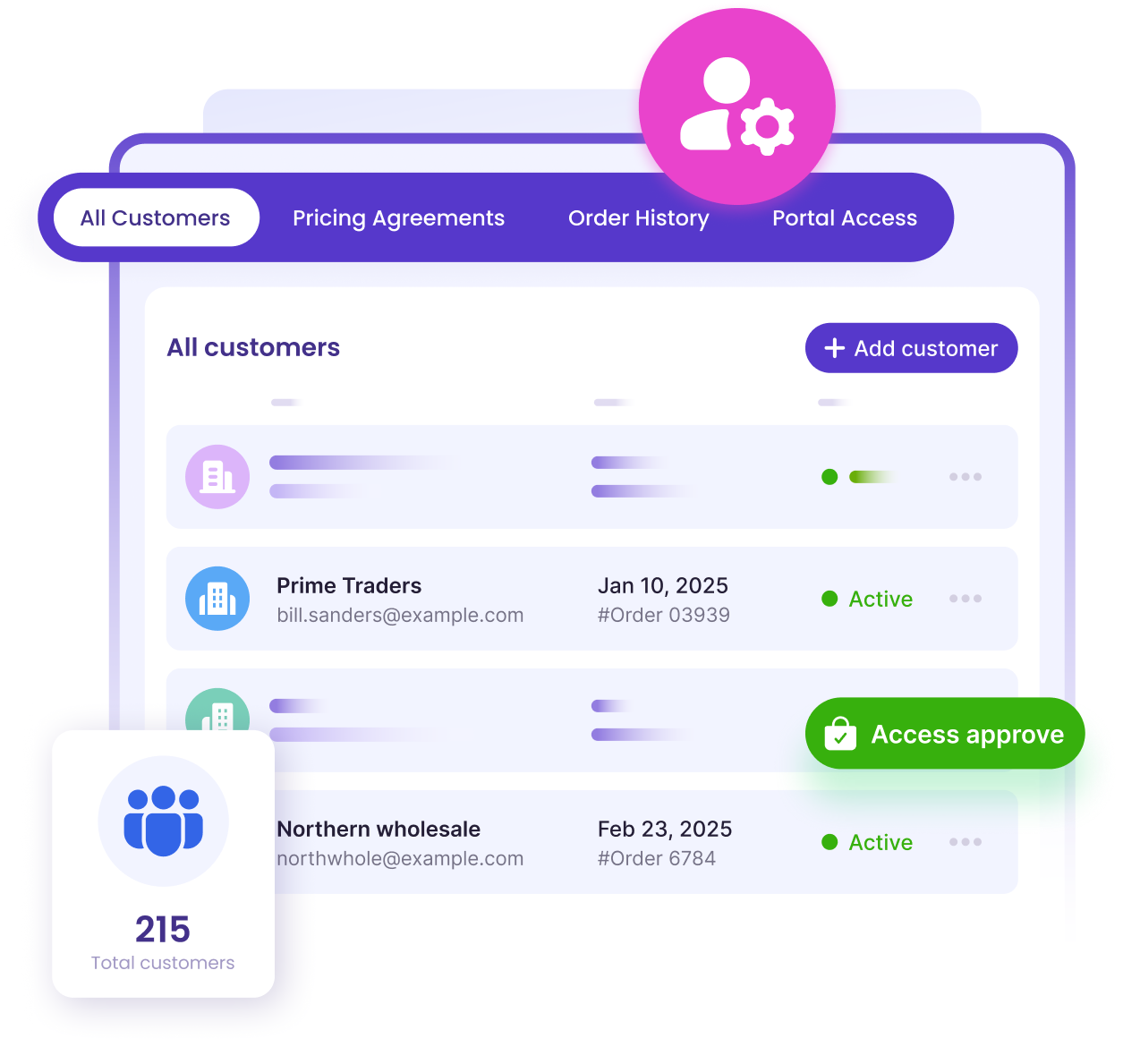
They log in, see their own prices and place orders whenever they want. You stop being the middleman for every reorder.

Discover what Stockpilot can do
for your business
In 45 minutes, our experts will show you how to manage orders, inventory, and shipping from one platform. For webshops, marketplaces, and everything in between.

What our customers say